A Pillar Page
Sleep art.
A long reading on the art of the bedroom wall. What it is, what it is for, and why every other category of bedroom art fails the biology of sleep onset.
The category that did not exist.
Sleep art is visual work designed against the neurobiology of sleep onset. The sentence is short. The implications are not. Until we named it, the category did not exist on the open market. The art on most bedroom walls — landscapes, seascapes, cool-blue abstracts, a photograph of a forest road — was chosen for daytime reasons. It looks good at 11am, in daylight, on an Instagram grid. At 11:47pm, under a warm lamp, the eye closing, it is doing something else entirely.
The eye does not care what the art looks like in daylight. The eye cares what the art is doing to the retina and the visual cortex in the final minutes before sleep. The biology is strict. The aesthetic follows from it.
Bedroom art for sleep: the four criteria.
A piece of sleep art passes four tests. It is low-luminance, so that it does not drive cone activation at the end of the day. It is warm in color temperature, so that it does not carry the 480nm wavelengths that suppress melatonin. It is low in spatial frequency, so that the primary visual cortex has nothing edge-heavy to resolve. And it is semantically empty, so that the interpretive cortex has nothing to chew on after the eyes have closed.
Most art fails at least two of these. Landscapes fail three. A black-and-white photograph with sharp edges fails the third. A blue abstract fails the second. A portrait fails all four. The category of sleep art exists because the category of “good bedroom art” has been, on biological grounds, nearly uninhabited.
Art that helps you sleep: what the prints look like.
The CLOSI Editions catalog is a small set of pigment-ink prints on cotton rag. Each print is signed, editioned, and numbered. The palette is warm: amber, ochre, rust, a deep soft black. The compositions are quiet — a single shape, a single gradient, a field of almost-uniform color that rewards long looking without demanding it. They are made to be the object you face from the bed, and nothing else.
They are photographed at 2400K, in a reclined viewing position, at the distance and angle of actual use. A print that looks right in that photograph will also look right on the wall.
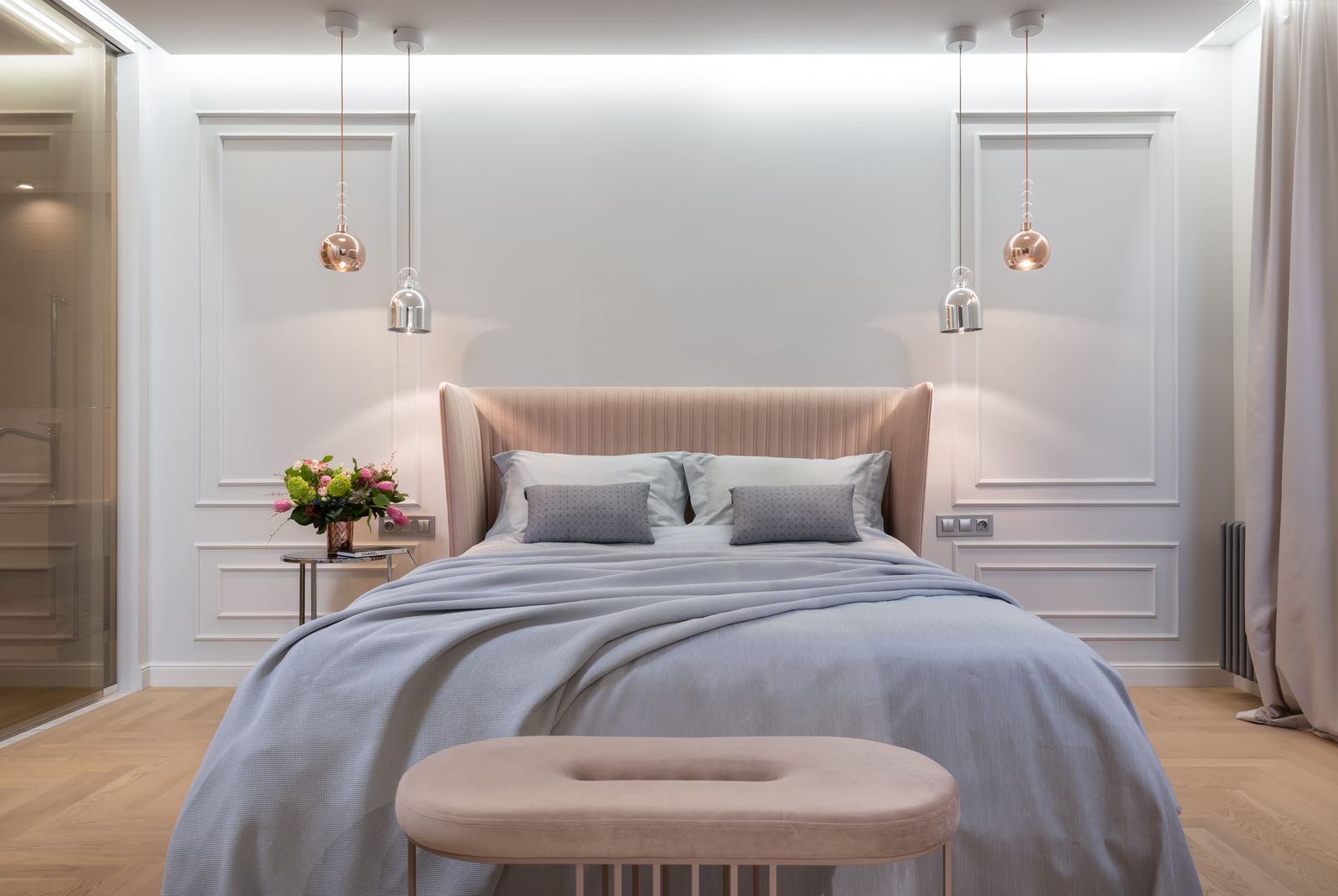
Sleep art prints and the rest of the room.
A print on the wall is one variable. The lamp on the nightstand is another. The screen on the ceiling and the screen in your hand are the largest. A print is not a solution in isolation; it is the anchor of a room that has been quieted. Swap cool daylight bulbs for warm ones at 2400K. Move the phone to another room or its charger. Turn down every light in the last hour of the day. Then the print can do its work.
The sleep solution page describes the full protocol. The science page describes the references. The sleep book page describes what to read once the lights are out.
Limited-edition sleep prints.
The prints are made in editions of fifty. Each is signed and numbered. When an edition is closed, it is closed. This is not a marketing tactic. It is how the prints are made — one pigment-ink run, one paper batch, one cotton rag. The scarcity is real because the making is real.
If a specific print is important to a specific room, the right moment to order is when the edition is open. The letter announces openings first. The catalog is at closi.com/editions.
Questions about sleep art.
What is sleep art, exactly?+
Sleep art is visual work designed against measurable criteria for sleep onset: low luminance, warm color temperature, low spatial frequency, and semantic emptiness. It is made to be the last thing the eye takes in before the lights go out.
What is the best art to put in a bedroom for sleep?+
A single, warm, low-contrast piece placed on the wall you face from the bed. Nothing to interpret, nothing to complete, nothing to finish. The print should be able to be looked at for twelve minutes without asking anything of you.
Is bedroom art with blue tones bad for sleep?+
Reflected light around 480nm is the most effective wavelength for suppressing melatonin. Cool-blue abstracts, ocean photographs, and calming blue landscapes work against sleep onset. Warm tones do not.
Do sleep art prints really help you fall asleep faster?+
They address a variable most protocols do not: the perceptual input of the final minutes before the lights go out. In combination with a warm, dim lamp and a quiet room, they meaningfully shorten sleep onset latency for most readers. They do not work in isolation.
How large should a sleep art print be?+
Large enough to be the dominant object on the wall you face from the bed, small enough that the frame does not reflect lamplight directly into the eye. For most bedrooms, a print at 24 by 30 inches is the right size.
The letter.
Once a fortnight, on what to look at before sleep.